Seminar: "Can We Decolonise Content Moderation? Insights from the Majority World."
Abstract
Content moderation sits at the heart of platform governance. Nevertheless, in many instances, platforms have failed to moderate content appropriately and consistently, causing different forms of harms, particularly in the Majority World. This talk discusses how content moderation operates and fails in low resource language contexts. Drawing on a long-term, mixed-methods research project across four regions, this talk will analyse content moderation practices in four languages: Maghrebi Arabic, Kiswahili, Tamil, and Quechua. The findings reveal a system structured by digital colonial legacies. First, platforms employ two general approaches to content moderation across these regions: a global approach, with a uniform set of policies applicable to all users, reinforcing post-colonial legacies, and a regional approach, which involves tailoring policies— particularly those related to cultural matters—to specific regions (e.g., TikTok). Second, given this reality, users have developed various tactics to evade algorithms, commonly known as “algospeak”. Third, content moderators for these languages are often exploited, overworked, and underpaid. Finally, although many social media platforms rely on LLMs for analysis of user generated content, user experiences suggest these systems fall short in many ways. This talk will also discuss practical recommendations to decolonise the field of content moderation.
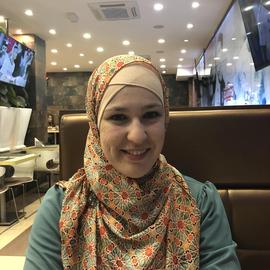
Invited Speaker: Dr. Mona Elswah (University of Exeter)
Short Bio: Dr. Mona Elswah is a Lecturer in Digital Media Governance at the Department of the Communications, Drama, and Film at the University of Exeter and the Director of the Digital Majority Centre. Prior to this, she was a Research Fellow at the Center for Democracy and Technology, where she examined content moderation policies and measures in non-English languages, focusing on countries in the Global South. Mona was also a Research Associate at Oxford University’s Oxford Internet Institute (OII) and a Fellow in Technology and Human Rights at Harvard University’s Carr Center, where she examined the algorithmic repression employed by tech companies against Arab users. In 2023, she earned her PhD from the OII at the University of Oxford. In her thesis, she examined the impact of digital repression on social movements’ online tactics, focusing on Syria and Tunisia as case studies. At the OII, she was a core member of the Democracy and Technology program (formerly known as the Computational Propaganda Project), where she examined junk news, information operations, and platform governance in non-Western contexts. Her work has been featured in several international media outlets, and she has presented her work at different conferences and events. In addition to her Ph.D., Mona holds a master’s degree in Journalism and Mass Communication and a Post-graduate Diploma in Public Policy from the American University in Cairo.